GST Registration in India: Do You Need It and How to Get It
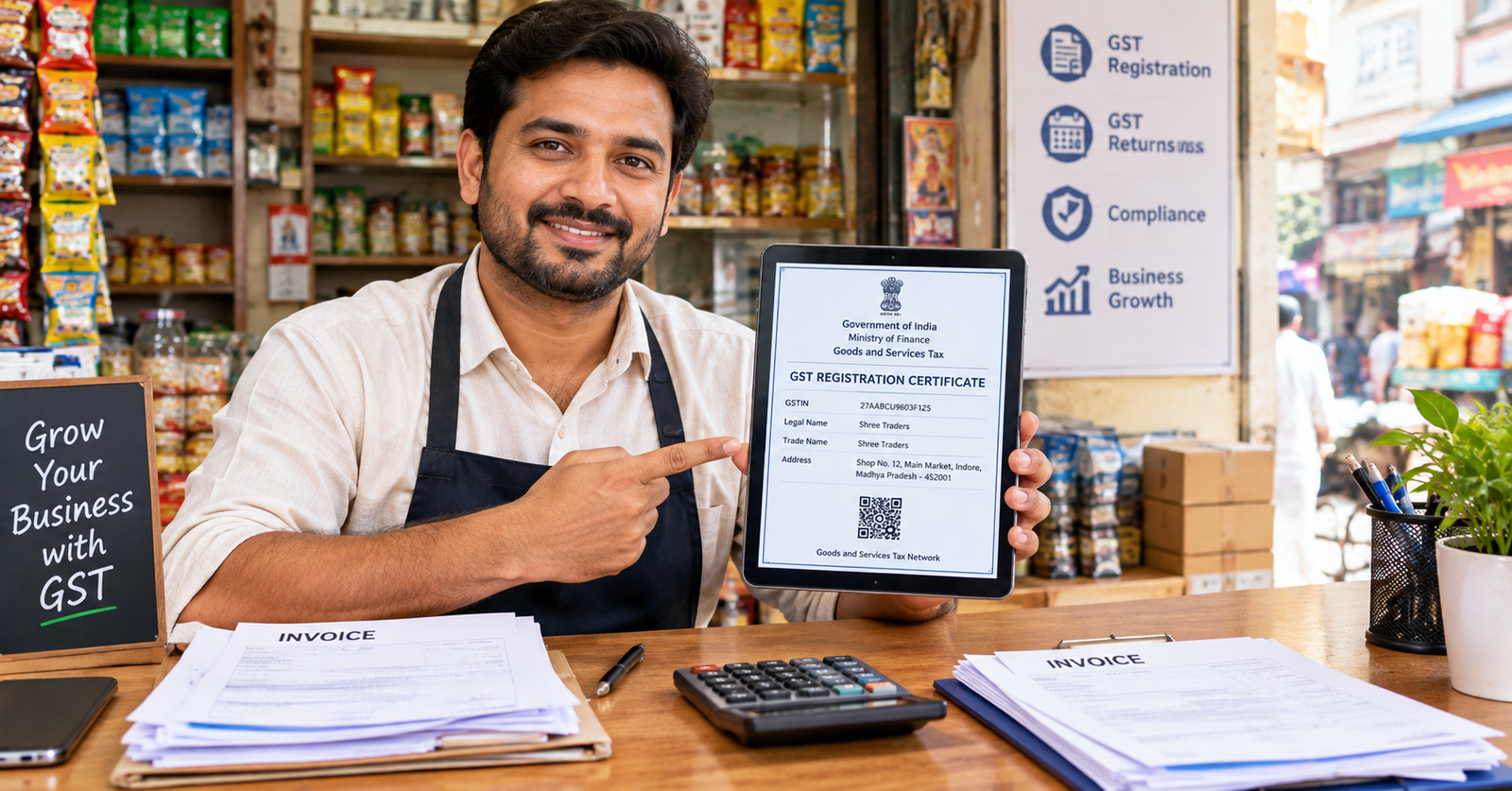
GST registration gives your business a 15-digit GSTIN, which lets you legally collect Goods and Services Tax and claim input tax credit. It is mandatory once your turnover crosses the prescribed limit, and in some cases regardless of turnover, such as selling through e-commerce platforms. You apply online through the GST portal.
For a trader in Vashi, a service provider in Kharghar, or an online seller shipping from Mumbai, a GSTIN is often what separates a small side business from a business that larger buyers will actually deal with. Here is how it works in plain terms.
GST is a single, destination-based indirect tax that replaced VAT, service tax, excise duty and several other levies. It is governed by the Central Goods and Services Tax Act, 2017.
Once you register, the department issues a registration certificate and a GSTIN. You then charge GST on your sales, pay the tax to the government, and file periodic returns.
Who Must Register for GST?
Registration is compulsory in these situations:
Turnover above the threshold
The basic limits are generally Rs 40 lakh for goods and Rs 20 lakh for services, with lower limits (Rs 10 lakh to Rs 20 lakh) in special category states. Limits differ by state and business type, so confirm the figure that applies to you.
Interstate supply of goods
If you sell goods from one state to another, registration is generally required regardless of turnover.
E-commerce sellers
Sellers who supply through platforms such as Amazon or Flipkart usually need a GSTIN regardless of turnover.
Other mandatory categories
This includes casual taxable persons, non-resident taxable persons, people paying tax under reverse charge, and input service distributors.
Why Register Even If You Are Below the Limit?
Voluntary registration has real benefits:
- Input tax credit: Claim back the GST you pay on purchases and expenses.
- Credibility: Corporate buyers and government tenders often ask for a GSTIN.
- Interstate reach: Sell across India without extra hurdles.
- Marketplace access: Required for most online selling platforms.
- Easier finance: Banks look at GST returns when assessing loans.
The trade-off is compliance. Once registered, you must file returns on time even in months with no sales.
Documents Required for GST Registration
Keep these ready:
- PAN card of the business or proprietor
- Aadhaar card of the proprietor, partners or directors
- Passport-size photographs
- Business address proof: electricity bill, property tax receipt or ownership deed
- Rent agreement and NOC if the premises are rented
- Bank account proof: cancelled cheque or first page of the passbook
- Certificate of Incorporation and MoA/AoA for companies, or partnership deed for firms
- Digital Signature Certificate (DSC) where required, such as for companies and LLPs
GST Registration Process, Step by Step
Step 1: Fill Part A of the application
Enter your PAN, mobile number and email on the GST portal. You receive OTPs to verify them and get a Temporary Reference Number (TRN).
Step 2: Complete Part B
Use the TRN to log in and fill in business details, promoter information, principal place of business, goods or services supplied, and bank details. Upload your documents.
Step 3: Verify with Aadhaar or DSC
Individuals verify with Aadhaar OTP. Companies and LLPs sign with a DSC.
Step 4: Receive the ARN
After submission you get an Application Reference Number (ARN) to track status.
Step 5: Officer review and GSTIN
An officer reviews the application. If the officer needs clarification, a notice is issued and you must reply within the given time. On approval, your GST certificate is issued.
Common Mistakes That Delay GST Approval
- Address mismatch between the proof and the application
- Unclear or blurred documents
- Wrong business activity or HSN/SAC selection
- Missing NOC for a rented or shared office
- Ignoring the officer’s notice and letting the application lapse
After Registration: Your GST Duties
- File GSTR-1 (outward supplies) and GSTR-3B (summary and tax payment) on time
- Issue proper tax invoices
- Reconcile purchases with what suppliers have filed
- File the annual return where applicable
Late filing brings fees and interest, so many businesses hand this to a professional.
https://www.gst.gov.in/
How Way2Legal Approaches GST Registration
Way2Legal is an online legal and compliance platform based in Kharghar, Navi Mumbai, working with startups and SMEs across India. GST is one of its core services, alongside company setup and tax filing.
Here is what the process looks like with us:
- Threshold check first. We tell you whether you need to register now, or whether voluntary registration makes sense.
- Document review before you apply. We catch mismatches that trigger notices.
- Handling of officer queries. If the department asks for clarification, we help you respond.
- Connected services. Pair your GSTIN with “GST Registration Services” or “MSME Registration” so everything stays consistent.
Questions to Ask Before Hiring a GST Consultant
- Is the quoted fee only for registration, or does it include return filing?
- How long do you expect approval to take, and what can delay it?
- Who responds if the GST officer sends a notice?
- Do you advise on the correct HSN or SAC code for my business?
- Can you set up monthly return filing after registration?
- Will I receive the GST certificate and login details in writing?
FAQs
What is the GST registration turnover limit in 2026?
The general limits are Rs 40 lakh for goods and Rs 20 lakh for services, and lower in some special category states. Interstate sellers and e-commerce sellers may need to register regardless of turnover.
How long does GST registration take?
Approval usually takes about 3 to 7 working days when documents are correct. Queries from the officer can extend this.
Can I do business without GST registration?
Only if you are below the limit and not in a mandatory category. Otherwise you cannot legally collect GST, and penalties may apply.
Is GST registration free?
The government does not charge a fee to apply on the portal. Professional consultants charge a service fee for preparing and filing the application.
Is GST registration free?
The government does not charge a fee to apply on the portal. Professional consultants charge a service fee for preparing and filing the application.
Do I need a GST number to register a trademark?
No, GST registration is not required to file a trademark application. Individuals and businesses without a GSTIN can still apply.