Introduction
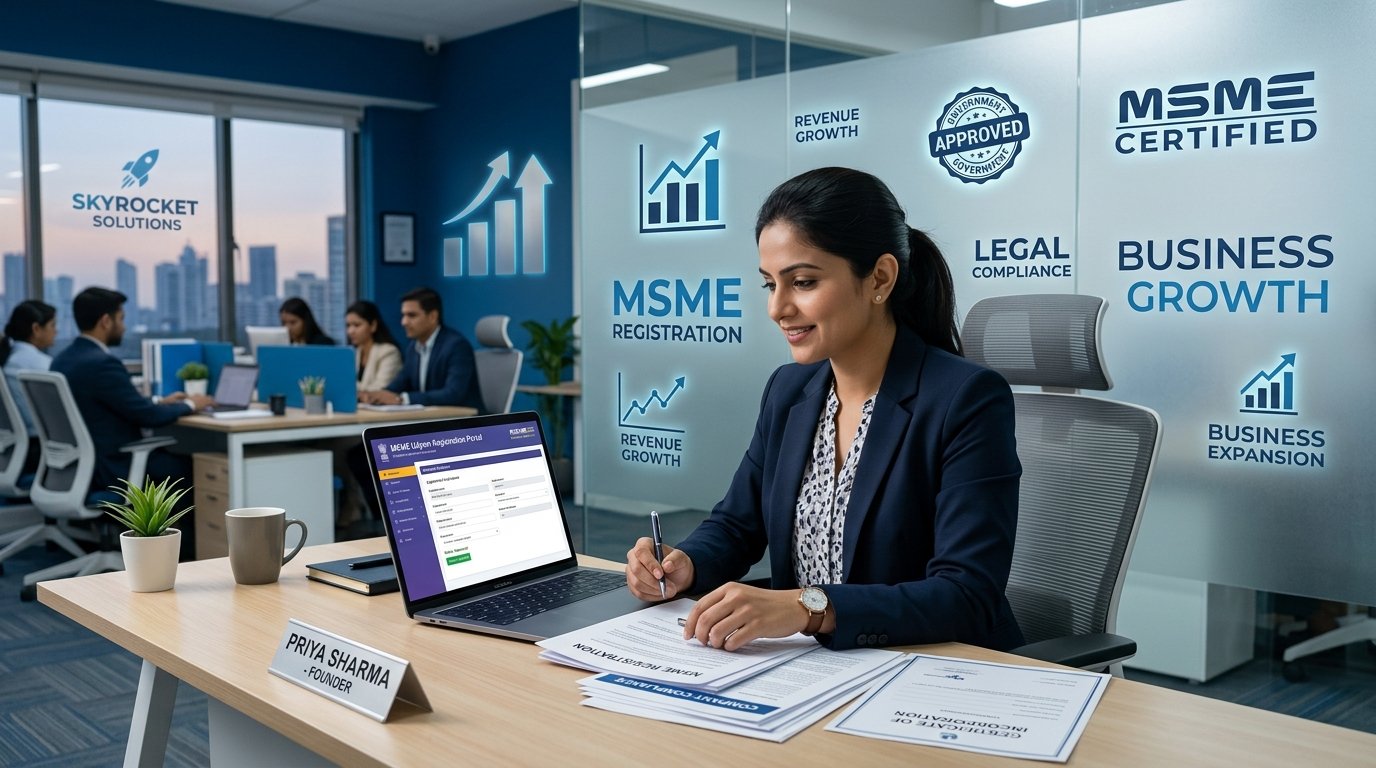
If you are an entrepreneur, startup founder, manufacturer, or service provider, one of the most common questions you may have is: Is MSME Registration mandatory in India? With increasing government support for Micro, Small, and Medium Enterprises (MSMEs), many business owners are eager to understand whether MSME Registration is a legal requirement or simply an optional registration that offers additional benefits. The simple answer is No, MSME Registration is not mandatory. Businesses can legally operate without it. However, choosing not to register may mean missing out on valuable benefits such as easier access to loans, government subsidies, protection against delayed payments, and eligibility for government tenders. This is why a growing number of businesses across India are opting for MSME Registration to strengthen their financial position and accelerate growth.
At Way2legal, we have helped numerous startups, small businesses, and entrepreneurs understand the importance of MSME Registration and complete the registration process smoothly. Our goal is not only to assist businesses with legal compliance but also to help them leverage government schemes and opportunities that contribute to long-term success.
What is MSME Registration?
MSME Registration, also known as Udyam Registration, is a government registration provided to Micro, Small, and Medium Enterprises (MSMEs) in India. It is issued through the Ministry of Micro, Small and Medium Enterprises.
The registration provides official recognition to eligible businesses and allows them to avail themselves of various government schemes and incentives.
Businesses eligible for MSME Registration include:
- Proprietorship firms
- Partnership firms
- Private Limited Companies
- Limited Liability Partnerships (LLPs)
- One Person Companies (OPCs)
- Hindu Undivided Families (HUFs)
- Co-operative societies
- Manufacturing businesses
- Service businesses
Why MSME Registration is Important Even Though It Is Not Mandatory
Even though MSME Registration is optional, businesses increasingly choose it because of the opportunities it creates.
Here are some major reasons:
1. Easier Access to Bank Loans
Registered MSMEs can access:
- Lower interest rates on loans
- Priority sector lending benefits
- Easier loan approvals
- Collateral-free loans under government schemes
This is especially useful for startups and growing businesses seeking working capital.
2. Protection Against Delayed Payments
One of the biggest advantages of MSME Registration is protection under the MSME Act.
If a buyer delays payment:
- Interest can be charged on delayed payments.
- MSMEs can file complaints through MSME Samadhan.
- Legal recovery becomes easier.
This protection helps improve cash flow and financial stability.
3. Eligibility for Government Tenders
Registered MSMEs receive several advantages in government procurement:
- Exemption from earnest money deposits (EMD)
- Preference in tender allocation
- Special quotas in government purchases
- Relaxed eligibility conditions
For businesses working with government departments, MSME Registration becomes highly valuable.
4. Tax and Financial Benefits
MSME Registration allows businesses to access:
- Subsidies on patent registration
- ISO certification reimbursements
- Technology upgrade subsidies
- Electricity bill concessions in some states
These incentives reduce operating costs and encourage growth.
Situations Where MSME Registration May Become Practically Necessary
Although not legally mandatory, MSME Registration may become essential in these situations:
Applying for Government Subsidies
Many government schemes require a valid MSME Registration certificate.
Seeking Collateral-Free Loans
Banks often prefer registered MSMEs while processing loans under government-backed schemes.
Participating in Government Tenders
Many tenders provide special benefits exclusively to registered MSMEs.
Claiming Delayed Payment Protection
Without MSME Registration, businesses may not receive protections available under the MSME Act.
Documents Required for MSME Registration
The registration process is simple and paperless.
Generally, the following details are required:
- Aadhaar Number of the owner
- PAN Card
- Business name
- Type of organization
- Business address
- Bank account details
- GST details (if applicable)
The registration is completed online and usually takes very little time.
Conclusion
At Way2legal, we understand that navigating legal registrations and business compliances can sometimes feel overwhelming. That is why our experienced team provides complete assistance with MSME Registration, ensuring a smooth, quick, and hassle-free registration process for businesses across India. From document preparation to application support, we are committed to helping your business unlock every benefit available under the MSME framework.
If you are planning to apply for MSME Registration or want expert guidance regarding your business compliance needs, Way2legal is here to assist you every step of the way.
FAQs
Is MSME Registration compulsory in India?
No, MSME Registration is voluntary. Businesses can operate without it, but registration offers many benefits.
Can a service business apply for MSME Registration?
Yes. Service providers such as consultants, IT firms, freelancers, and agencies are eligible.
Is MSME Registration free?
The government registration process is free. However, many businesses seek professional assistance for error-free filing.
Can startups get MSME Registration?
Yes. Startups are eligible if they meet the MSME classification criteria.
Need Expert Legal Assistance?